Tarot and Oracle Card Reading: What Is It?
Readings from tarot and oracle cards are spiritual divination tools that can help you understand your past, present, and future. By interpreting symbolic messages from the cards, readers help you connect with your higher self, subconscious mind, or universal energies to guide your decisions and personal growth.
Both kinds of decks have their own structure and style, even though they are both used for intuitive guidance:
What Is an Oracle Card Reading?
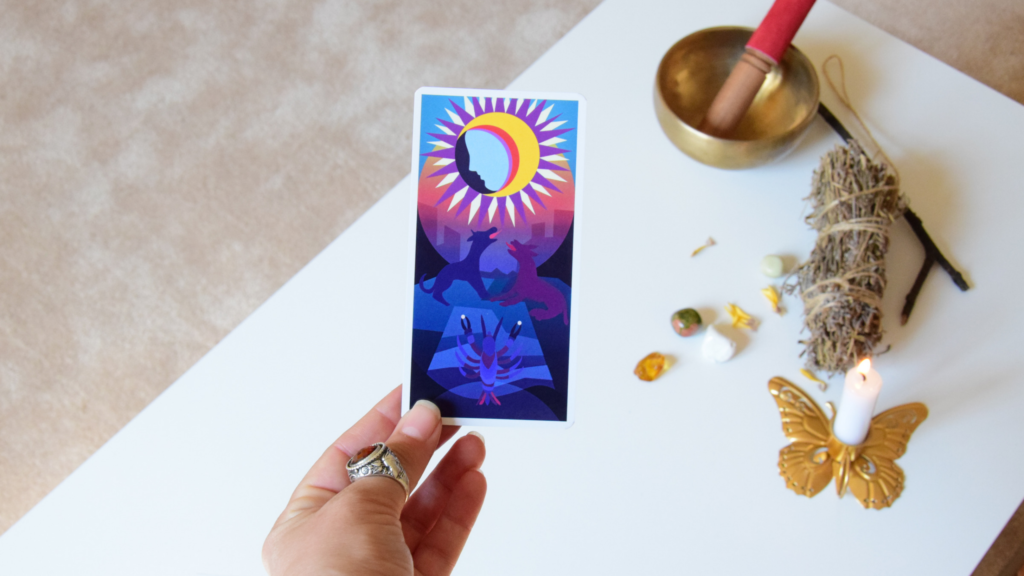
An Oracle deck is a set of cards with pictures, words, symbols, or short spiritual messages. Every deck has its own theme and style. One might focus on nature, another on angels, another on simple words like “trust” or “release.”
During a reading, the reader uses a card’s image and meaning to explore your question or intention. Some people also draw one card a day for reflection, journaling, or meditation.
Oracle decks don’t follow one fixed structure. The number of cards, their meanings, and the methods all vary.
What Is a Tarot Card Reading?
A traditional Tarot deck usually has 78 cards, split into two groups.
The Major Arcana has 22 cards that tend to show big life themes, like change, love, or endings. The Minor Arcana has 56 cards in four suits, and these usually reflect everyday situations such as work, feelings, and choices.
In a reading, the cards are placed in a pattern called a “spread,” and each position adds meaning. The reader looks at the images, symbols, and positions together and relates them to your question.
Oracle vs. Tarot: What’s the Difference?
Oracle cards vary widely in design, number, and meaning. Each deck follows its own system, so readings often feel more open-ended.
Tarot cards follow a more established structure, with established meanings, symbols, and spreads. Readers still interpret them in their own ways.
Neither is better or more accurate than the other. The right choice depends on what you feel drawn to and the kind of reading you want.
Every Tarot card has multiple levels of meaning, and how they are interpreted frequently depends on
The query posed
Combinations of cards
During the reading, there were intuitive messages
What Questions Can You Explore?
Open-ended questions usually lead to more useful reflection than ones that need a plain yes or no. For example:
- What would help me look at this situation differently?
- What should I reflect on before making this decision?
- What pattern in my relationships might I need to notice?
- What can I learn from the challenge I’m facing?
- What might help me move forward with more confidence?
- What possibilities could I consider right now?
What Happens During a Reading?
A session may include talking about your question or intention, choosing or drawing cards, looking at the images and symbols, and discussing the themes or choices that come up. You’ll also have time to ask questions and share your own thoughts.
People experience readings in different ways. A message may feel meaningful straight away, become clearer later, or not feel relevant at all. You’re free to ask for clarification and to decide what fits your own experience.
A card can’t tell you who you are. But it can ask you a question you’ve been avoiding.
Can Cards Predict the Future?
Some readers use cards to explore possible directions ahead. Others focus on the present, on personal patterns, or on spiritual reflection.
Either way, a reading doesn’t fix your future. People make choices, circumstances change, and no reading can guarantee what will happen. It’s best not to make a major decision based on a reading alone.
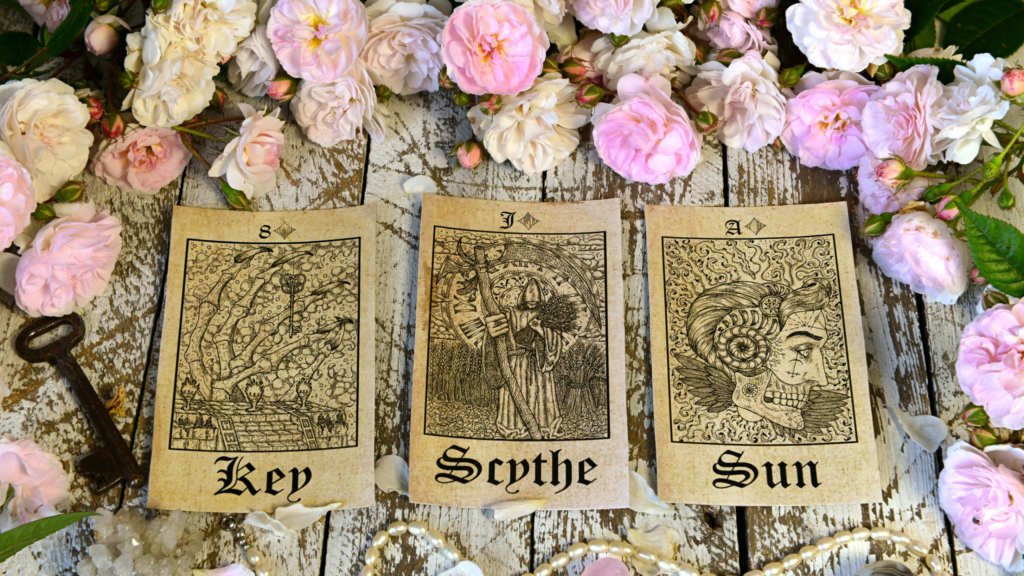
How a Reading Can Support Self-Reflection
A card’s image or message can nudge you to think about something in a new way. Say someone draws a card linked to patience. They might ask themselves whether they’ve been rushing a decision. The card hasn’t proved anything. It has simply given them a question worth considering.
That’s the real use of a reading: a starting point for reflection, not a replacement for clear thinking, honest conversations, or practical action.
Do You Need Any Experience?
No. You don’t need special abilities, past knowledge, or a particular belief system. Being curious is enough, and it’s fine to ask how a reader works.
If you choose a practitioner, look for someone who explains their approach clearly, respects your boundaries, and doesn’t use fear or pressure to sell more sessions. You should leave feeling free to reflect and decide for yourself.
The best reading doesn’t leave you with a prediction. It leaves you with something to think about.
Rohini Maaster
Frequently Asked Questions
What is an Oracle Card Reading?
It’s a session where a reader uses Oracle cards, with their images and messages, to help you reflect on a question. Each deck has its own theme and style.
What is a Tarot Card Reading?
It uses a deck of usually 78 cards, laid out in a spread. The reader interprets the images, symbols, and positions in relation to your question.
What is the difference between Oracle and Tarot Cards?
Tarot follows a more established structure, while Oracle decks vary widely. Neither is more powerful than the other.
Can Tarot or Oracle Cards predict the future?
No reading can guarantee what will happen. Cards are better used to reflect on possibilities, patterns, and your own choices.
Do I need to know anything about cards before getting a reading?
Not at all. Beginners are welcome, and you can ask the reader anything about how the session works.
Can I learn Tarot or Oracle reading myself?
Yes. Many people learn to read the cards for their own reflection, and you don’t need any special abilities to begin. Learning usually means getting to know the cards, how spreads work, and how to ask clear, open questions. I also offer training, so you’re welcome to enquire if you’d like to learn with me.
How should I prepare for a card reading?
Think about what you’d like to explore, and try to frame it as an open question. Come with an open mind rather than a set expectation.
Can a card reading help me make a decision?
It can offer a new angle to think about. The decision itself should rest on your own judgment and the real facts of your situation.
How do I choose between an Oracle reading and a Tarot reading?
Go with the one you feel drawn to. If you like open, intuitive messages, Oracle may suit you. If you like a more structured approach, you may enjoy Tarot.
Let the cards start the conversation. You are the one who finishes it.
If something in your life has been asking for your attention, a card reading can offer a quiet space to pause and look at it from a different perspective. You can begin in whichever way feels right for you.
You may wish to receive a personal reading. You’re welcome to get in touch and learn more about the approach I offer. Come with your questions and stay open to reflection.
Or you may feel drawn to learn Tarot or Oracle cards yourself. I also offer training, so if you’d like to understand the cards for your own practice rather than only receive a reading, you’re welcome to enquire.
Whichever you choose, remember that your choices remain your own.